The Hayek Council for a Free World was established in 2026 in response to the rapidly changing geopolitical environment. It is an association of writers and thinkers in the broadly classically liberal and libertarian tradition who are of the view that an unambiguously and muscularly pro-liberty voice has been lacking in the field of international affairs and global governance.
Our Mission
Many liberals rightly flinch at the mere suggestion of international governance. In modern times these “globalist” institutions have in many ways spearheaded the destruction of freedoms both large and small worldwide.
It is however precisely, as FA Hayek noted, due to “abandonment of nineteenth-century liberalism” in the field of international relations that the world has had to “pay so dearly”. The retreat of liberals and liberalism from international affairs into the safe and steady domain of domestic politics has meant the cession of the field almost entirely to those who seek to weaponise global institutions against liberty: whether dog-eat-dog chauvinism and or dirigiste developmentalism.
To the Hayek Council, this calls for the re-engagement of a consciously liberal international affairs, not further liberal disengagement.
Our People
Secretariat
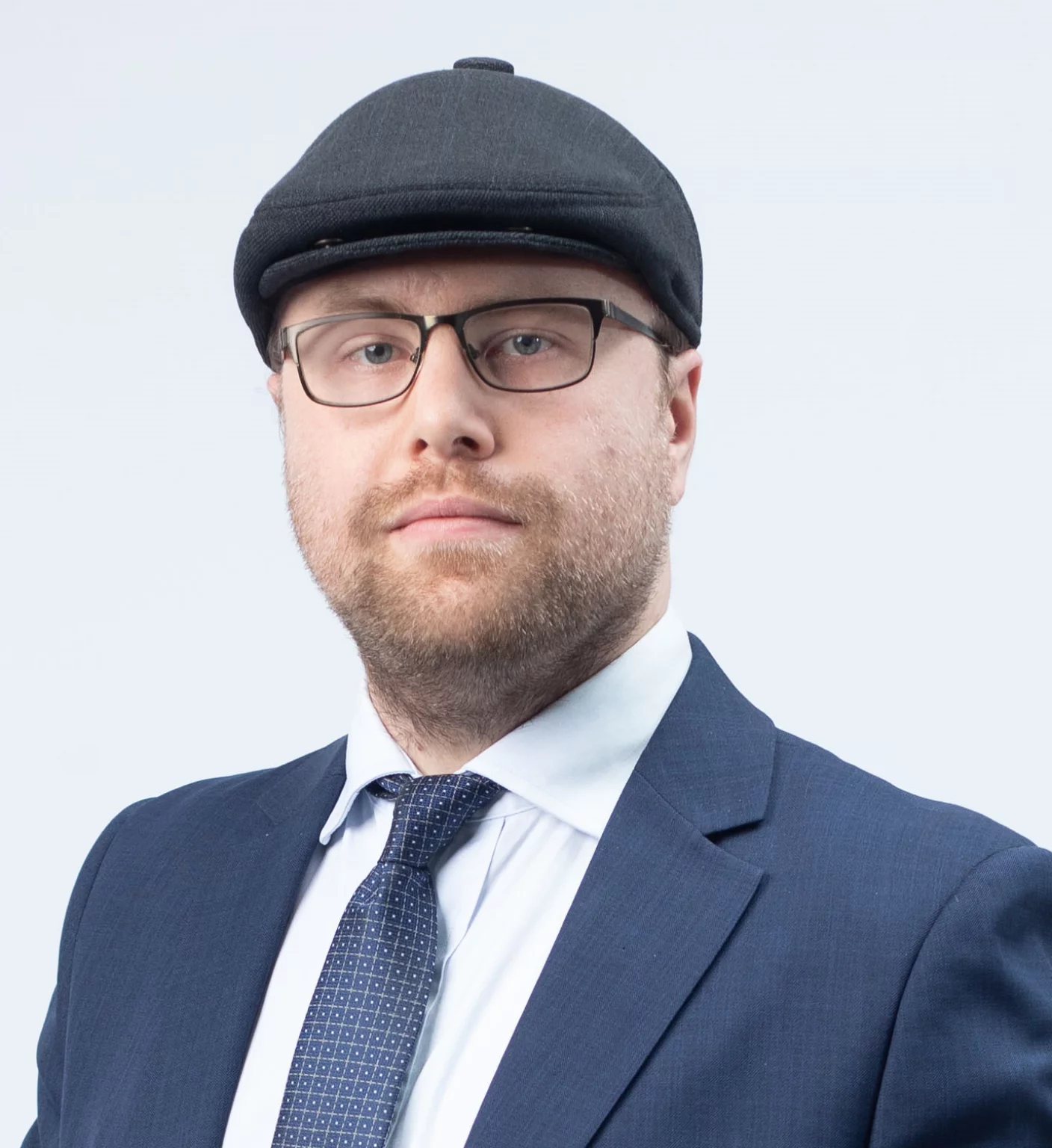
Martin van Staden
Martin van Staden is a director of the Hayek Council. He has an LL.D. from the University of Pretoria, and serves as the Head of Policy at the Free Market Foundation.
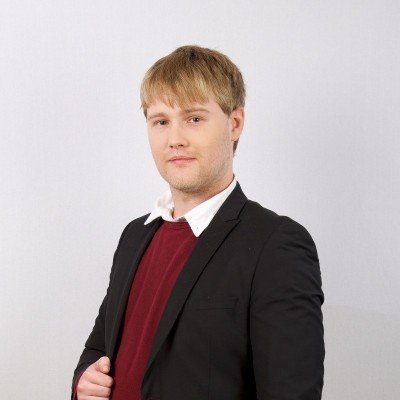
Nicholas Woode-Smith
Nicholas Woode-Smith is a director of the Hayek Council. He has a BSocSci from the University of Cape Town, and serves as the Managing Editor of the Rational Standard.
Advisors
Prof Walter Block
Prof Walter Block serves as the Harold E Wirth Eminent Scholar Chair in Economics at Loyola University.
Brandon L Christensen
Brandon L Christensen serves as the Editor in Chief of Isonomia Quarterly and Notes on Liberty.
Oded JK Faran
Oded JK Faran is a legal scholar, geopolitical analyst, and General Director of Faran & Co.
Jack V Lloyd
Jack V Lloyd is a lawyer, author, and multimedia producer known for his Voluntaryist comic.
Phumlani M Majozi
Phumlani M Majozi serves as the Executive Director of the African Markets Institute.
Simply Mdawini
Simply Mdawini is a financial crime analyst for a leading global investment bank.
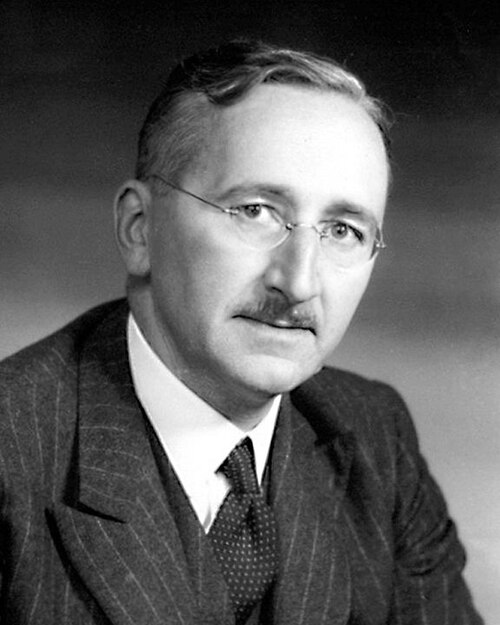
Friedrich August von Hayek was a classical liberal Austrian polymath primarily known for his groundbreaking thought on the market economy and rule of law as manifested within domestic policy and regulatory regimes. One of Hayek’s greatest but most underrated contributions, however, was in the realm of international affairs, wherein he favoured – as an ideal – the realisation of an “interstate federation” of free countries.
These contributions were set out in Hayek’s essay, “The Economic Conditions of Interstate Federalism” (1939), and his most well-known book, The Road to Serfdom (1944).
The Hayek Council seeks to revive and adapt this ideal of Hayek’s in particular, and channel Hayek’s broader sentiments around Western civilisation in general, for the contemporary international affairs discourse.
Our work is however not exclusively organised around these two major contributions that FA Hayek made to the field of international affairs.
Indeed, after the Second World War, Hayek’s intellectual activism largely shifted from the international to the domestic sphere, though he never abandoned the ideals he had set out. This is why Hayek’s work must be approached holistically: he was a man fiercely dedicated to the realisation of practical freedom. We espouse the same sentiment.
In addition to FA Hayek as our intellectual lodestar, other influences include:
- Immanuel Kant
- John Stuart Mill
- Lionel Robbins
- Clarence Streit
- Ludwig von Mises
- Henry Jackson
In a time of intense geopolitical realignment and cynicism, an initiative such as the Hayek Council is overdue.
The Hayek Council resists the cynical modern faux-pacifist libertarian adoption of insularity that is primarily premised on a loss of faith in the moral and political superiority of Western civilisation.
It also resists the chauvinistic new conservatism that views geopolitics as an inherently zero-sum game. Sometimes, geopolitics is a zero-sum game, but this is by no means default. We do not believe military power should be wielded in cynical furtherance of the interests of particular states.
At the same time, the Hayek Council further resists the fair-weather progressive pacifism of the prevailing system of international law and order, which seeks to hinder foreign interventions unless tyrannical regimes (which it unjustly tolerates in its midst) provide consent.
The Hayek Council takes the timeless insights and principles of liberalism and libertarianism and adapts and applies them consistently to the domain of international affairs. This entails an emphasis on the liberty of the individual, to the defence of which the rightful sovereignty of the state is inextricably connected.
The Hayek Council approaches the field of foreign and security policy, international affairs, international relations, and global governance holistically. These are some of our particular areas of interest.
Multilateral Institutions
Most advocates of global federalism today operate within the general mould of the United Nations, with its associated notions of “social justice” and “developmental statism”. FA Hayek was an outspoken opponent of this model, labelling social justice a “mirage” and rejecting economic planning by multilateral institutions.
The Hayek Council’s approach to global policy is therefore that of unapologetic classical liberalism, whereby the freedom of communities and of the individual, and its implications of subsidiarity, a free market economy, and constitutionally limited government, take centre stage.
The Hayek Council does not believe interstate federation or any other form of global governance should be adopted uncritically or rushed into for its own sake. Hayek believed first and foremost in individual liberty, free enterprise, and the free and spontaneous social order guaranteed by the rule of law and strict observance of constitutional standards. All of these requirements would need to be met before any change in world order could rightly be sanctioned. As Hayek wrote in The Constitution of Liberty (1960):
“Until the protection of individual freedom is much more firmly secured than it is now, the creation of a world state probably would be a greater danger to the future of civilization than even war.” (380)
Hayek reiterated these concerns about the direction of international law and organisation in Law, Legislation, and Liberty (1973). The problems he identified have only escalated in the decades since.
Western Civilisation on the International Front
Western civilisation is to be cherished, prized, protected, and advanced.
The West is the only major global civilisation that recognised that the individual should be given their due recognition, without elevating the individual “over” the community. It is this recognition of individual agency and dignity within the context of a communal society that gave the West an unmatched edge in science, technology, economic growth, and even warfare, that persists to this day. To the degree that the world’s other cherishable civilisations have caught up to the West, they have done so by adapting and domesticating aspects (and this aspect primarily) of Western civilisation.
Western civilisation is also unique for its ability – and indeed its self-imposed requirement – to introspect. When the West does wrong – and the West has and does do wrong – it is hyperconscious of that fact, and this consciousness informs future behaviour. The West participated in slavery but was the first civilisation to abandon that institution – and force all others to do likewise. The West engaged in oftentimes brutal acts of colonial injustice, but was the first civilisation to largely voluntarily relinquish its colonies, whereas the thought never occurred elsewhere.
Western civilisation did not originate in Western Europe, though it might have cohered there.
Indeed, what is understood to be the Western tradition draws heavily from the Middle Eastern cradle of civilisation, and over time has also drawn liberally from the compatible values of Eastern civilisations and in some respects African civilisation. It is not “white”, nor however is it ashamed of the preponderant skintone of its most vocal proponents.
Western civilisation is today found all over the world, characterised primarily by a society’s willingness to concede and then embrace the fact that the human individual is not merely a part of the whole that is the community, but in fact a whole in themselves that deserves recognition as such alongside the community. Though this is not all that constitutes Western civilisation, it is a meaningful heuristic: the greater the recognition of the individual, the more Western a society inevitably is.
Though it is jealously protective of the individual, Western civilisation is not to be confused with the contemporary approach of detached atomism adopted by many cynical opponents of Western values.
It is for these reasons that we are open believers in Western global hegemony.
One of the most harmful lies of the twentieth century was the fiction of the “equality of states”, a novelty never before recognised but manifested in a naïve though hopeful Western misunderstanding of geopolitical reality after the Second World War. This misunderstanding equated Western states with other states, to the point where today it is not uncommon for tyranny and aggression by certain states to be justified on the basis of prior Western humanitarian interventions and defence policies.
We do not believe in Western hegemony due to any kind of chauvinistic superiority complex linked to blood or soil.
FA Hayek was first and foremost a believer in freedom, and respect for liberty is the distinguishing characteristic of the West from the Rest. In this respect, we make liberal use of the Cato Institute’s Human Freedom Index as an (admittedly low-resolution and imperfect) heuristic for the precedence of states. This does not mean we turn a blind eye to the plentiful examples of Western infringements against freedom or Western geopolitical mishaps and moral catastrophes.
Alternatives to Pure Realism
Classical realism in international relations views states as rational, unitary actors pursuing power and survival in an anarchic world through amoral, Machiavellian competition – countries as princes writ large, focused on dominance and self-preservation above all else.
The Hayek Council appreciates the descriptive value of this perspective but is of the view that some nuance is lost in its absoluteness.
We accept realism’s core insight: the natural state of geopolitics is one of competition, where actors (states, regimes, alliances) often pursue advantage without moral restraint, and conflict is a persistent risk. Idealistic peacenik approaches that assume perpetual harmony or moral convergence ignore this reality and leave free societies vulnerable.
At the same time, we reject pure realism’s key flaws.
States are not rational monoliths or homogenous entities. They are aggregates of individuals, factions, elites, and ideologies with competing agendas. Many regimes today are driven by apocalyptic ideologies, cult-like leadership, or irrational fanaticism rather than cool calculation, which are perspectives often not shared by factions within those states. Treating these countries as predictable “rational actors” with a unitary agenda misreads the world, underestimates threats, and ignores opportunities.
The Hayek Council’s approach is grounded in classical liberal principles – individual liberty, free markets, rule of law, and Western civilisational superiority – while operating with realist eyes open. We engage geopolitics without illusions: power matters, deterrence is essential, and intervention may be necessary to protect lives and liberty when just cause exists. But we never abandon our moral compass or descend into cynical zero-sum amorality. The goal remains advancing ordered liberty in a dangerous world, not mere survival or dominance for their own sake.