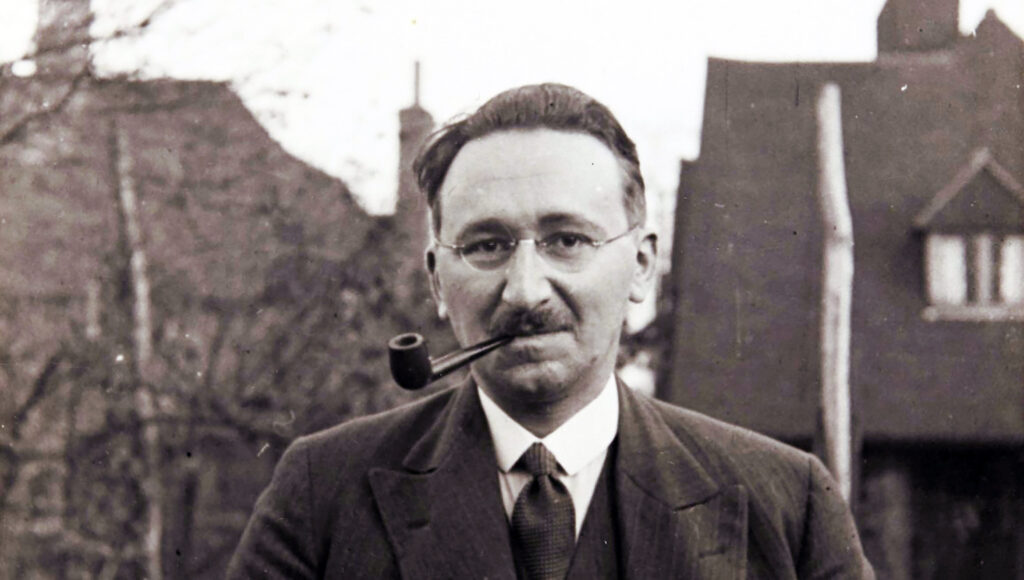
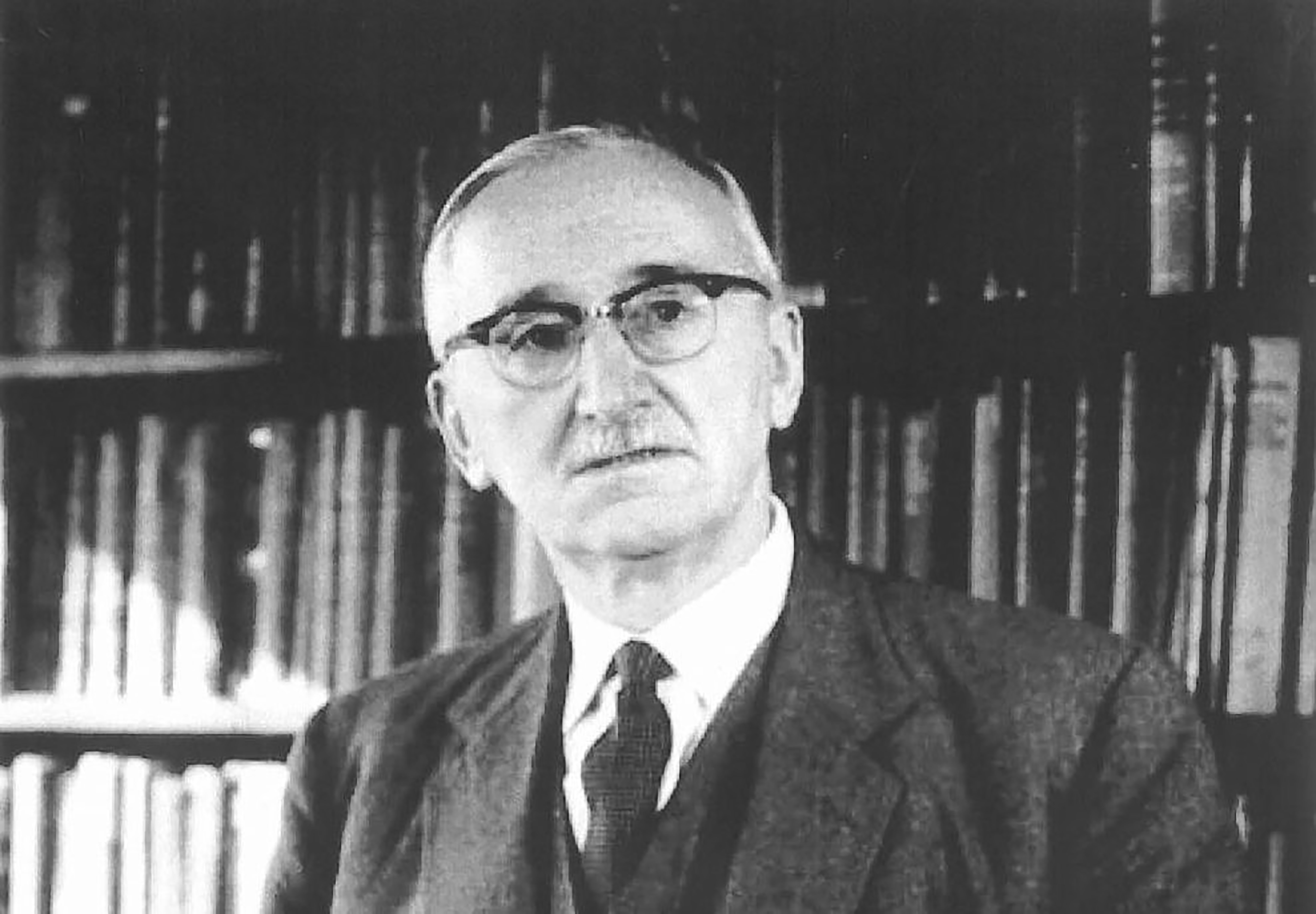
Friedrich August von Hayek (1899-1992) was an Austrian economist, polymath, and legal philosopher whose profound influence on classical liberalism reshaped understandings of markets, knowledge, and governance.
Born in Vienna, Hayek trained in law and economics before emigrating to Britain and later the United States. He earned the 1974 Nobel Prize in Economic Sciences for his work on the theory of money, economic fluctuations, and the interdependence of economic, social, and institutional phenomena.
A towering figure of the Austrian School, Hayek was far more than an economist: he authored seminal works in psychology, philosophy of science, and constitutional law, including The Constitution of Liberty and the three-volume Law, Legislation, and Liberty. His ideas emphasised spontaneous order, the limits of central planning, and the rule of law as safeguards for individual liberty.
In the realm of international affairs, however, certain aspects of his thought, particularly his early advocacy for supranational federal structures, remain underappreciated amid his broader fame as a critic of socialism.
Hayek’s most overlooked contributions to international affairs appear in his 1939 essay, “The Economic Conditions of Interstate Federalism”, and in Chapter 15 of his 1944 masterpiece The Road to Serfdom, titled “The Prospects of International Order”.
Written on the eve of and during the Second World War, these contributions proposed “interstate federation” not as a utopian, interventionist global government, but as a practical liberal mechanism to secure peace, free trade, and individual freedom across borders.
At a time when chauvinism and central planning threatened Europe, Hayek argued that true international order required more than alliances or loose leagues, but federalist frameworks that both curbed the supposed sovereignty of states while also recognising the imperative of political decentralisation. These writings, largely eclipsed by his domestic critiques of planning, offered a blueprint for post-war Europe and remain strikingly relevant to debates over regional integration, trade blocs, and supranational institutions today.
Far from being a non-interventionist pacifist as many later liberals would become, Hayek recognised that liberty sometimes requires resolute defence against totalitarian threats. In the face of aggressive communism and fascism, he endorsed the use of coercive power – including military alliances and limited interventions – to preserve a free international order. He viewed the Allied effort in the Second World War not merely as self-defence but as a moral imperative to dismantle regimes built on cruelty, and he supported defensive blocs like the North Atlantic Treaty Organisation as necessary realism to contain Soviet expansion during the Cold War. Hayek was clear: freedom’s survival could demand hard power when spontaneous order faced existential destruction.
In the 1939 essay, Hayek laid out the economic prerequisites for a durable interstate federation. He insisted that political union alone would fail without the free movement of goods, people, and capital across member states. Such mobility would render state price controls, tariffs, and protectionist policies ineffective, as resources and labour would simply flow to more liberal jurisdictions. “If goods, men, and money can move freely over the interstate frontiers”, he wrote, “it becomes clearly impossible to affect the prices of the different products through action by the individual state”.
Even social regulations, such as limits on working hours, would prove difficult for any single member to enforce unilaterally, because competitive pressures from freer states would undermine them.
Hayek envisioned common legal rules, premised not on what are understood today to be mere political diktates dressed in the grab of law, but true universal rules of allowable conduct. This economic integration would not centralise power but in fact be designed to diffuse it, preventing any state apparatus from pursuing discriminatory or interventionist policies that distort markets.
A central insight of the 1939 contribution was that federation inherently limits statism. Diverse member states with varying economic conditions and values would find it nearly impossible to agree on detailed, interventionist legislation benefiting specific groups by rentseeking against others; instead, they would converge on general, abstract rules of conduct.
Hayek saw this as the “logical consummation of the liberal program” and “the creation of an effective international order of law”.
Far from eroding liberty in the same way modern multilateral institutions are fond of doing, such a federation would protect it by subjecting state governments to the discipline of a supranational rule of law and market competition.
Hayek extended and refined these ideas in The Road to Serfdom’s chapter on international order, warning against the seductive but dangerous notion of international economic planning. Post-war enthusiasts for global coordination often imagined a supranational authority directing trade, production, or resource allocation – yet Hayek showed this would magnify the very problems of national planning: arbitrary power, irreconcilable conflicts over values, and the tyranny of centralised decisions on a vast scale.
“Any international economic authority, not subject to a superior political power”, he cautioned, “could easily exercise the most tyrannical and irresponsible power imaginable”. Instead, the world needed a strong but strictly limited political authority – an international federation enforcing the rule of law, capable of saying “No” to restrictive state measures such as trade barriers or currency manipulations that harm neighbours or disadvantaged constituencies. Drawing explicitly on the federal principle proven in existing unions (like the United States), Hayek argued that such a structure would preserve competition, prevent war, and safeguard liberty without creating a monolithic super-state. It would restrain states from actions destructive to international harmony while leaving domestic cultural and social affairs to member states.
These contributions were no detour from Hayek’s core philosophy – they flowed directly from his lifelong commitment to freedom as understood in the Western civilisational mould.
Hayek’s international liberalism was unflinchingly muscular, not dovish, when confronted with the realities of authoritarianism. He argued that, under dire historical circumstances, limits on popular power could better safeguard freedom than a fully embraced democracy captured by illiberal forces. In 1981, he stated plainly: “Personally I prefer a liberal dictator to democratic government lacking liberalism.” His visits to Chile under General Augusto Pinochet and his praise for the regime’s economic reforms – declaring personal freedom “much greater” there than under Salvador Allende – reflected this view: When socialism threatened to destroy liberal institutions, limits on democratic rule could serve the cause of freedom, provided it prioritised market order and strictly limited coercion to justifiable rules. Similarly, he backed containment against Soviet aggression, seeing defensive military commitments as essential to prevent the spread of tyranny that would obliterate spontaneous order worldwide.
Whether analysing the knowledge problem in markets, the dangers of central planning, or the architecture of international order, Hayek consistently championed institutions that dispersed power, respected spontaneous order, and protected the individual and voluntary community from coercive authority.
In an era when collectivism once again threatens these values, Hayek’s vision of international affairs stands as a powerful reminder that liberty thrives not through isolation or unchecked sovereignty, but through institutions that are dedicated to the ideal of liberty per se.
The Hayek Council stands committed to this legacy today.